
A dog sweater knitting pattern is a fun and practical way to keep your dog warm and stylish during chilly days. Knitting a sweater for your pup is not only a creative project but also a thoughtful way to show love. Whether your dog has short hair, a small frame, or just loves snuggling on cold mornings, a handmade sweater provides comfort and warmth that store-bought options often cannot match.
This guide will walk you through everything you need to know to make a snug, stretchy sweater with a short turtleneck, ribbed body, and comfortable leg openings. The pattern is simple enough for beginners, yet flexible enough to customize colors, textures, and sizes for any dog.
You’ll also find tips on measuring your dog, selecting yarn, and finishing the edges neatly for a professional look. By the end, your dog will have a beautiful knitted sweater they can wear with pride.
So grab your needles and yarn and start knitting your dog’s new favorite sweater today!
This post features affiliate links. If you use these links to buy something we may earn a commission at no additional cost to you. As an Amazon Affiliate we earn from qualifying purchases.
Why Knit a Dog Sweater?
Knitting a dog sweater is more than just a cute idea. It’s practical too. Small and short-haired dogs often need extra warmth when the temperature drops. A knitted dog sweater helps your pet stay comfortable both indoors and outside.
Plus, when you knit your own dog sweater, you can choose the perfect color, texture, and fit. It’s also a great way to use leftover yarn from other projects. And unlike store-bought sweaters, handmade ones stretch better and fit your dog’s body shape more naturally.
If you enjoy crafting and love your dog, this is the perfect project.

Choosing the Right Yarn and Needles
The right yarn makes all the difference. You want something soft, warm, and easy to care for. The best dog sweaters are warm, soft, and machine-washable. Choose a yarn that feels comfortable on your hands and gentle on your dog’s skin.
Here’s what to look for:
- Yarn weight: Medium-weight yarn (worsted or aran) works best. It’s not too thick or thin.
- Fiber: Acrylic or wool blends offer warmth, stretch, and durability.
- Texture: Avoid rough or scratchy yarns. Soft and smooth yarns are ideal to prevent irritation on your dog’s skin.
- Color: Pick bright or fun colors to match your dog’s personality and to make the sweater visible outdoors.
For needles, circular needles or double-pointed needles work best if you prefer knitting in the round. A 4 mm (US 6) or 5 mm (US 8) needle usually matches medium-weight yarn.
Measuring Your Dog for a Perfect Fit
Before you begin your pattern to knit a dog sweater, take accurate measurements. This ensures the sweater fits comfortably without being too tight.
You’ll need to measure:
- Neck circumference: Measure around the base of your dog’s neck.
- Chest circumference: Measure around the widest part of the chest, just behind the front legs.
- Back length: Measure from the base of the neck to the base of the tail.
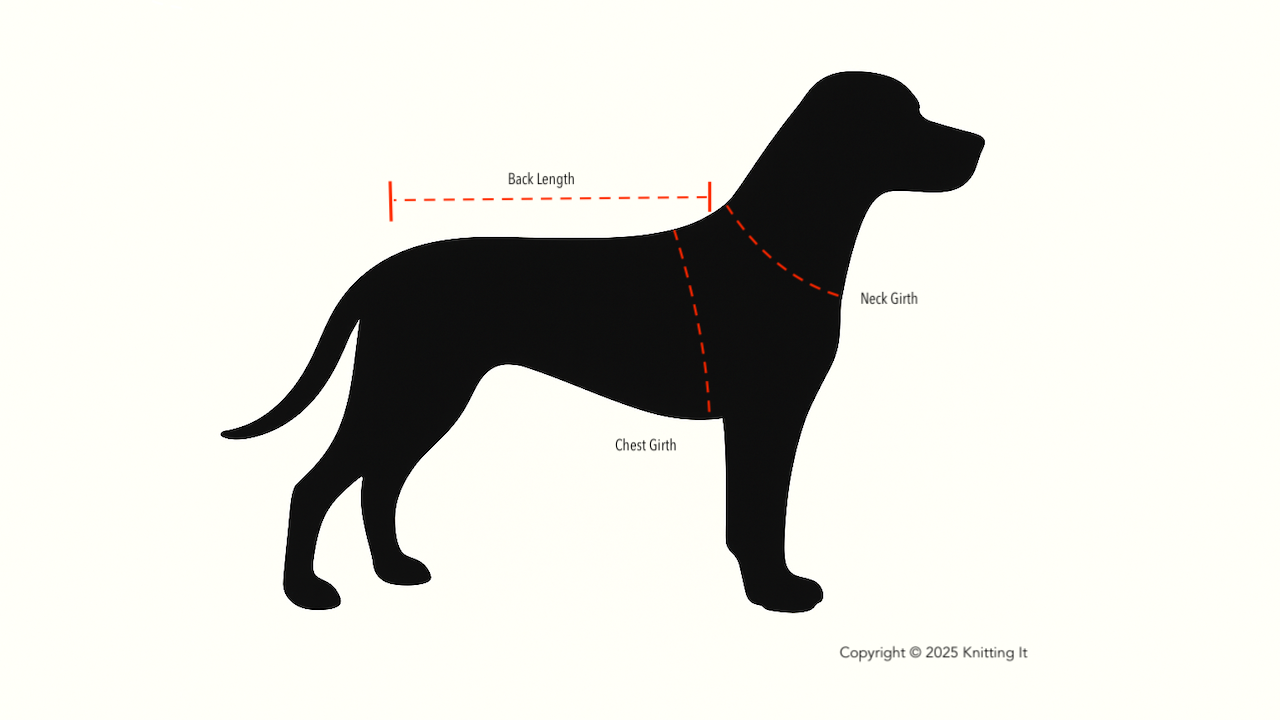
Write these numbers down. Your measurements will help you decide how many stitches to cast on and how long to knit each section.
If you’re knitting for a small dog, you’ll use fewer stitches. For medium or large dogs, simply increase the stitch count evenly across the pattern.
Materials and Tools
To knit your own dog sweater, gather these supplies first:
- Medium or aran weight yarn; about 5 to 9oz (150 to 250g) depending on dog size
- Circular knitting needles or a set of 5 double pointed needles
- Stitch Markers
- Tape measure
- Tapestry needle
- Scissors
Optional items include buttons, small patches, or extra yarn for stripes. Using the right materials ensures your knit dog sweater is comfortable, durable, and easy to finish.
How To Make a Dog Sweater
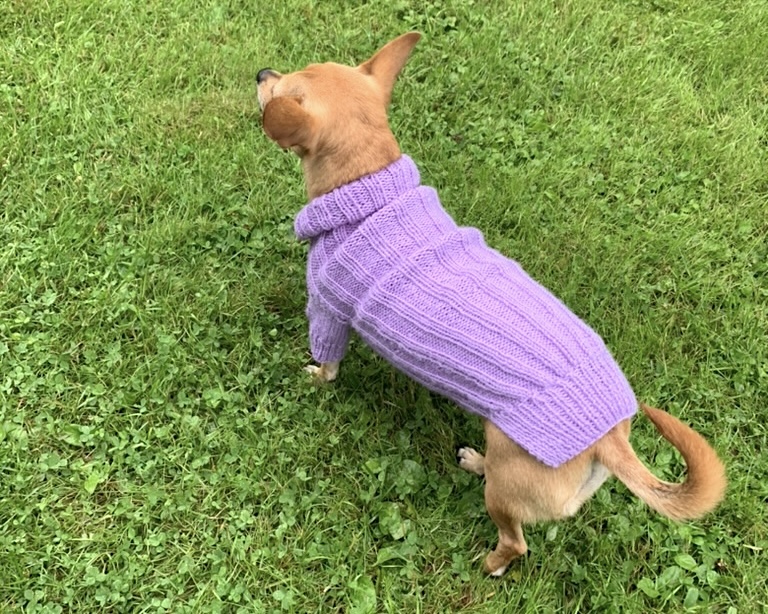
This dog sweater knitting pattern is designed for comfort and stretch. It features a short turtleneck that hugs the neck gently and a ribbed body that moves easily with your dog. Knitting in the round creates a smooth, seamless finish.
It’s simple, neat, and cozy—a simple pattern you can knit again and again in different colors and sizes. You’ll love how quick and rewarding it feels. And your dog will love the warmth and comfort.
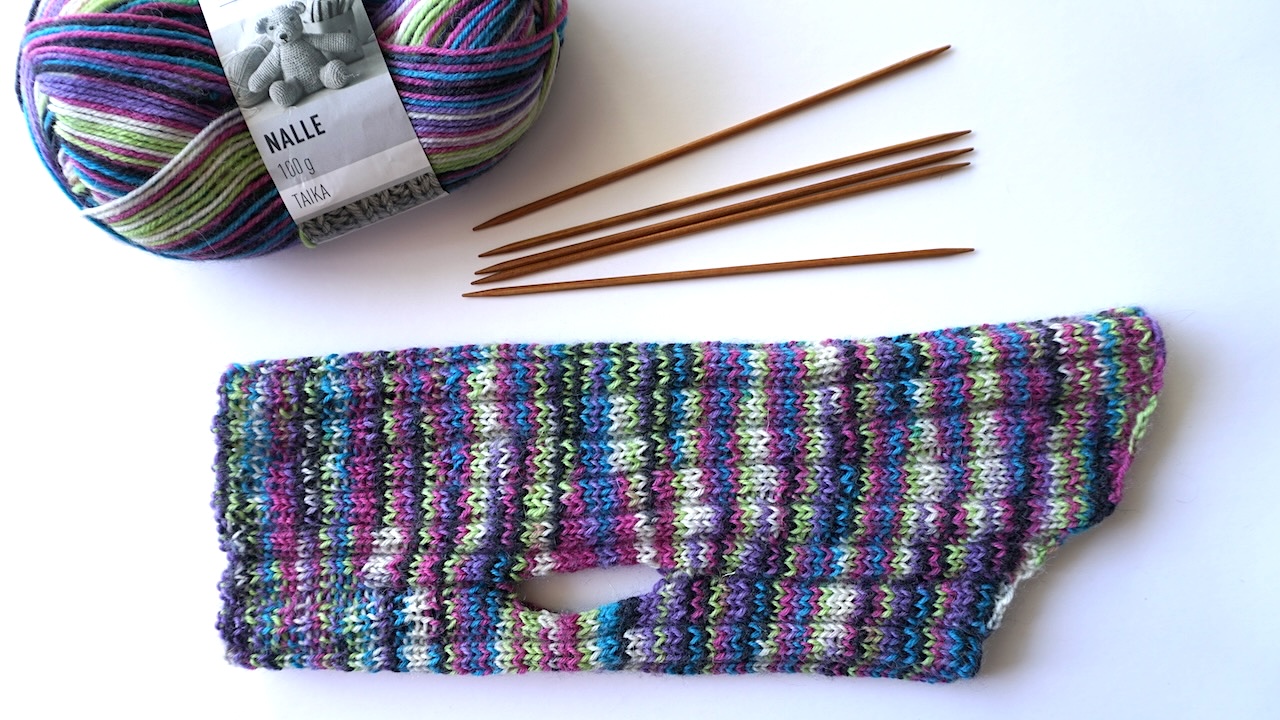
Skills Required: Cast on, bind off, knit, purl, decreases
Dimensions: Fits a small-sized dog, different sizes available
Yarn: About 1.7oz (50g) of light/DK weight yarn for sizes S and XS and 3.5oz (100g) for size M
Needles: Size US 4 (3.5mm) or according to your personal knitting gauge
Gauge: 24 sts = 4 inches (10cm)
Sizing (chest girth / back length / number of stitches):
XS = chest approx. 11 to 12.5 inches (28-32cm), back approx. 10 inches (25cm), 48 sts
S = chest approx. 15 to 16.5 inches (38-42cm), back approx. 13.5 inches (34cm), 64 sts
M = chest approx. 19 to 20.5 inches (48-52cm), back approx. 19 inches (48cm), 80 sts
In general, size XS is a good fit for a Chihuahua, size S for a Bichon Frisé, and size M for a Cocker Spaniel. My dog is a Chihuahua mix with a larger chest and longer back than Chihuahuas normally have, so I chose size S for her and it fits perfectly. It’s easy to adjust the length if your dog has, for example, wider chest or longer back than what the instructions suggest. Just cast on fewer or more stitches, make less or more increases for the chest or knit a shorter or longer back panel.
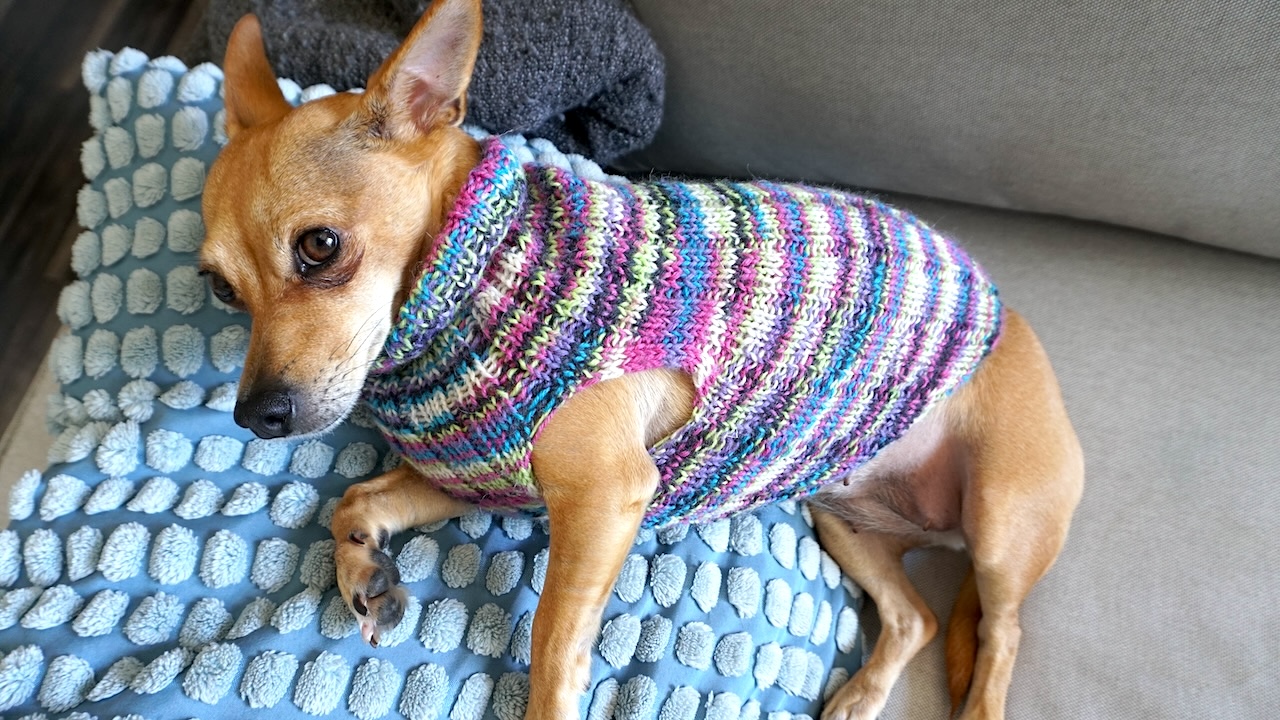
I am using Novita Nalle Taika yarn in color 881. It’s a beautiful, multicolored yarn that creates a stripe-like design to the garment. Wool blend is great for keeping your pup warm in the cold weather. The yarn is machine washable, making it a great choice for your pups’ sweater. Because let’s be honest, dog sweaters can become stinkier than we’d want.
I am using US 4 (3.5mm) double pointed needles, which is the recommended needle size for this yarn. If your gauge differs, adjust needle size as needed. You can also use circular needles.
Step-by-Step Dog Sweater Knitting Pattern
Now that you’ve gathered your materials and taken measurements, it’s time to start knitting!
Let’s take a closer look at the steps to create a cozy, well-fitting dog sweater. This step-by-step guide will walk you through the turtleneck, ribbed body, leg openings, and finishing touches so your pup ends up with a perfect handmade sweater.
Step 1: Cast On and Work the Turtleneck
First, cast on enough stitches to fit around your dog’s neck (XS = 48 sts, S = 64 sts, M = 80 sts). You can use double pointed needles or circular needles. Then join in the round, being careful not to twist your stitches.
Start with 2×2 ribbing for the turtleneck. To do this, work 2 knit, 2 purl ribbing for 2–3 inches (about 6cm).
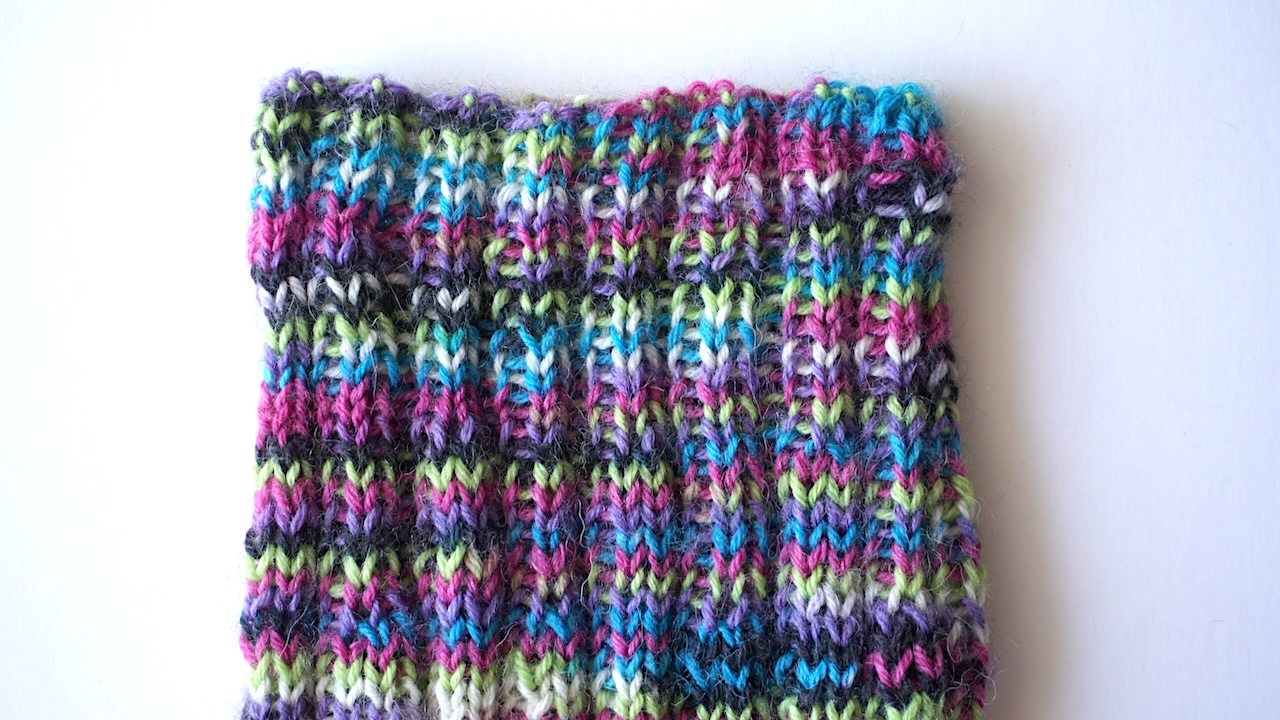
This forms a soft and stretchy collar that gently hugs the neck.
You can adjust the length of the turtleneck. If you prefer a longer one, just knit more rounds in ribbing.
Step 2: Shape the Body in 3×2 Ribbing
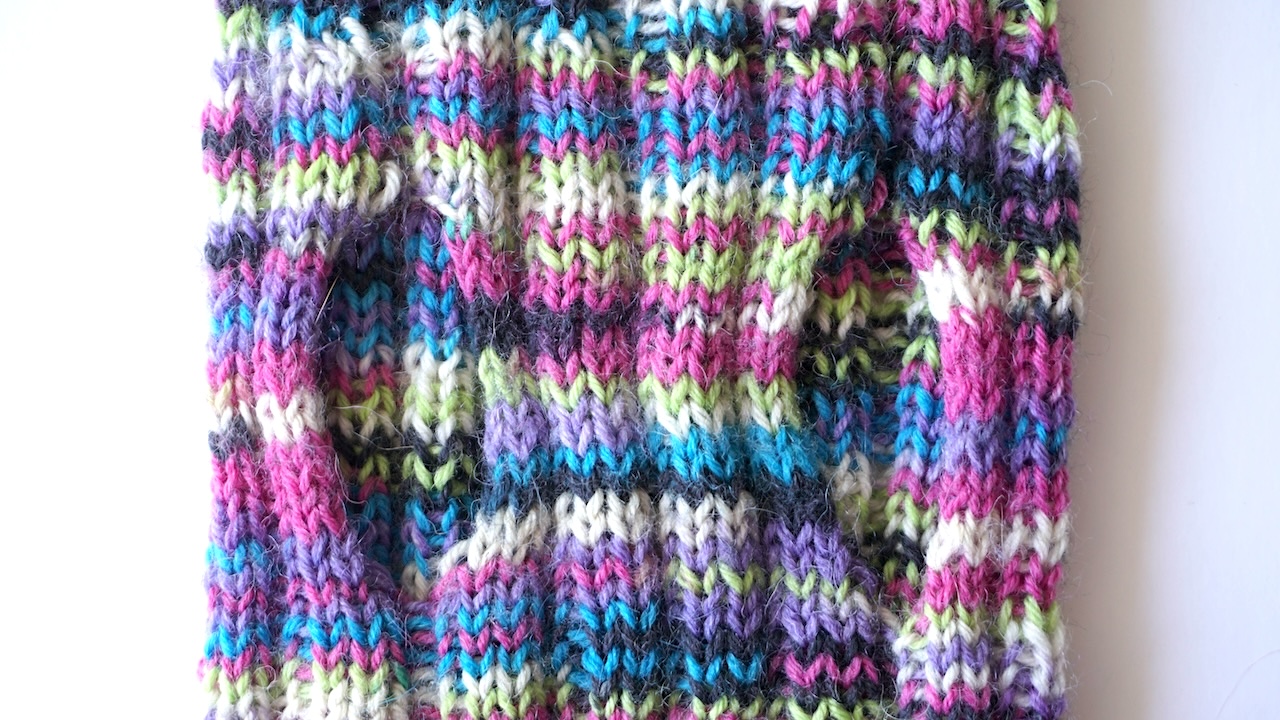
Once the neck is done, it’s time to switch to the main pattern 3 knit x 2 purl ribbing for the body. This pattern stretches around the chest while giving a snug fit.
To do this, continue knitting in the round and add one stitch to every other “knit stripe” of your ribbing. You will now have a XS = 54, S = 72, M = 90 stitches on your project.
Keep knitting until the length of your work reaches the following length: XS = 3 1/8 inches (8cm), S = 3 1/2 inches (9cm), M = 4 inches (10cm). Then add one stitch to all of those “knit stripes” that you didn’t yet add a stitch. This makes your stitch count to XS = 60, S = 80, M = 100 stitches.
Next, continue ribbing 3 knit x 2 purl until your work reaches XS = 4 3/4 inches (12cm), S = 5 7/8 inches (15cm), M = 7 inches (18cm). Then it’s time to create the leg openings.
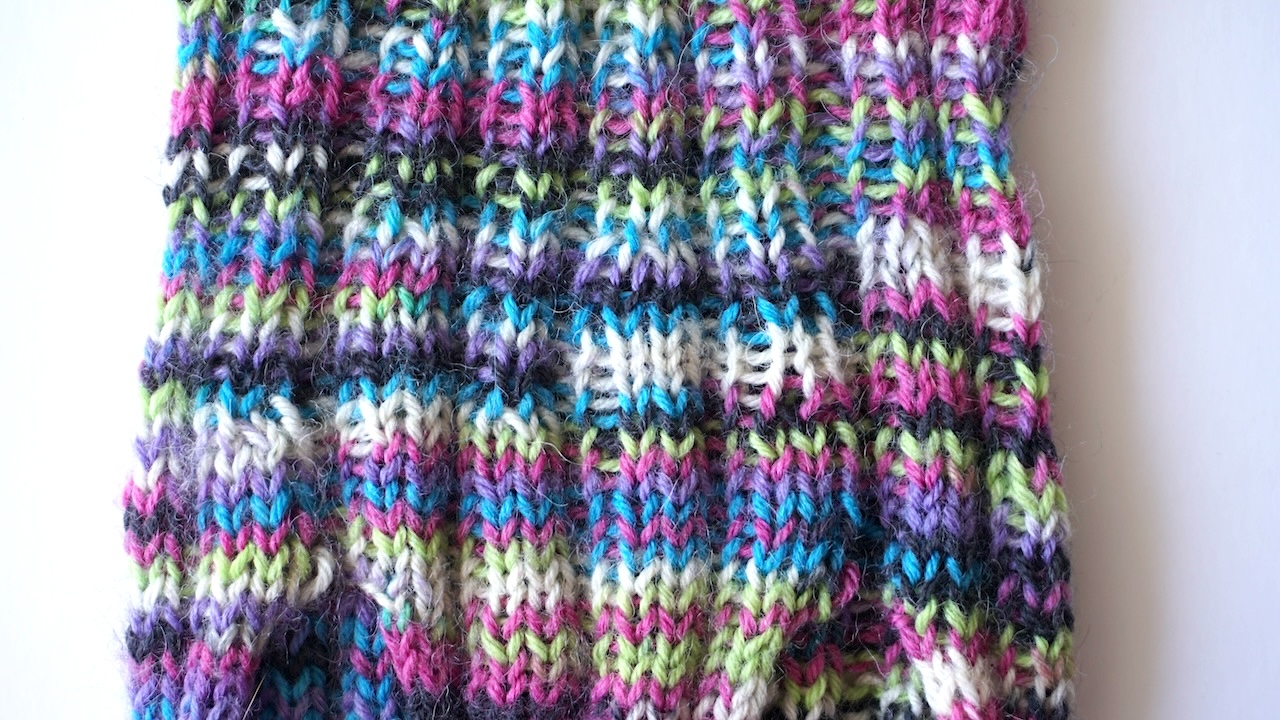
This ribbing pattern adds flexibility and shape to the sweater. It stretches around the chest and keeps your dog cozy without being tight. Ribbing stretches naturally, so your dog will stay comfortable even if measurements are slightly off.
If you want to add stripes or color blocks, now is a great time to do it. Just change colors every few rows.
Step 3: Create Leg Openings
To allow movement, you’ll need to add small leg holes by binding off stitches.
Start by knitting 3 stitches. Then bind off 2 stitches in pattern for the first leg hole.
Next, knit the next section of stitches for the chest (belly section): XS = 13, S = 18, M = 23 stitches. Then move these stitches on a thread of yarn or an extra needle.
Then bind off 2 stitches for the second leg hole and continue knitting to the end of the round (back section).
Step 4: Knit the Back Section
Continue knitting in 3 knit x 2 purl ribbing in flat until the work reaches XS = 2 3/8 inches (6cm), S = 3 1/8 inches (8cm), M = 4 inches (10cm) measured from the beginning of the leg openings.
Then move these stitches on a thread of yarn or an extra needle.
Step 5: Knit the Belly Section
Take the stitches that you earlier moved on a thread of yarn or an extra needle for the belly section and move them onto your working needles again.
Continue knitting in 3 knit x 2 purl ribbing in flat until the work reaches XS = 2 3/8 inches (6cm), S = 3 1/8 inches (8cm), M = 4 inches (10cm) measured from the beginning of the leg openings.
Now you have knitted the back and belly sections and simultaneously also the leg openings. Knitting the back and belly section in flat forms a comfortable fit while keeping the sweater secure.
Step 4: Knit the Body to Full Length
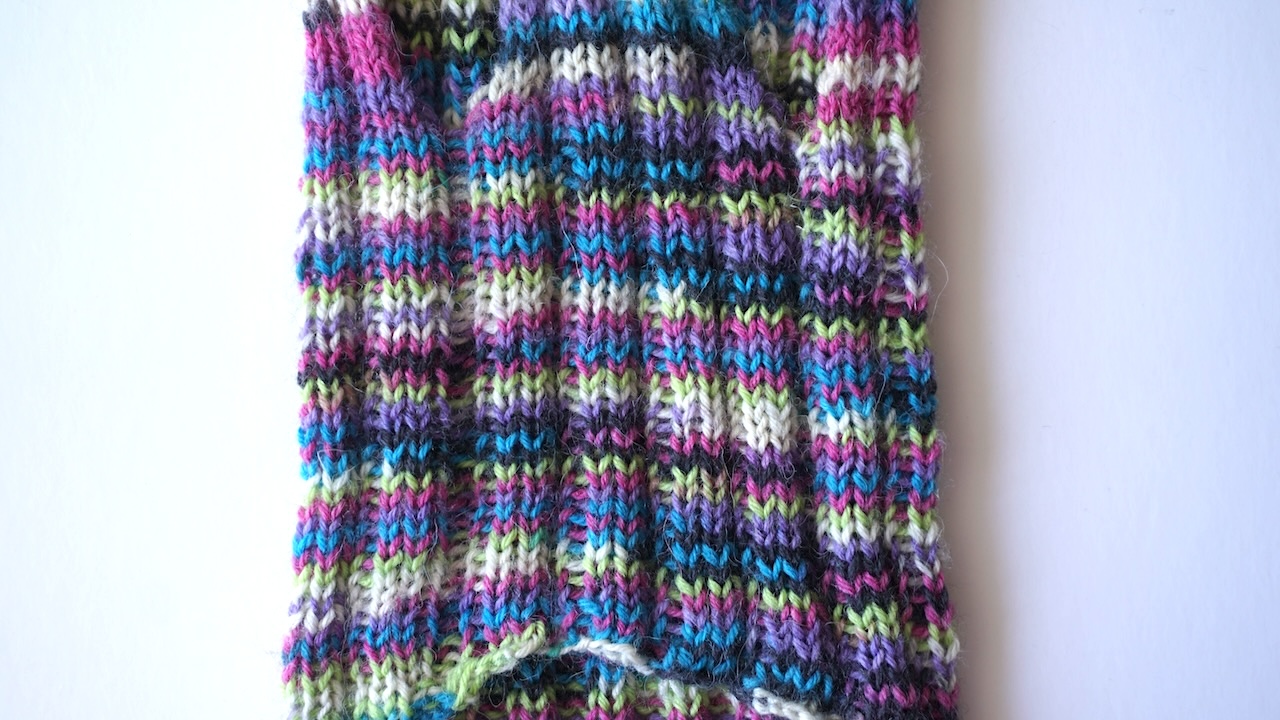
On the next round, move all stitches onto your working needles and cast on 2 stitches on each side of the belly section for the leg opening. Check out the instructions for casting on stitches in the middle of your project here. Your stitch count is now the following: XS = 60, S = 80, M = 100 stitches.
Now your knitted dog sweater has space for your dog’s front legs to move comfortably.
Then continue knitting in the round in the 3×2 ribbing pattern again until the dog sweater comfortably covers the belly and the length is about XS = 9 1/2 inches (24cm), S = 12 inches (31cm), M = 15 inches (38cm).
Check the fit as you go. If needed, you can easily adjust the length by knitting more or fewer rounds.
Step 5: Bind Off and Finish the Edges
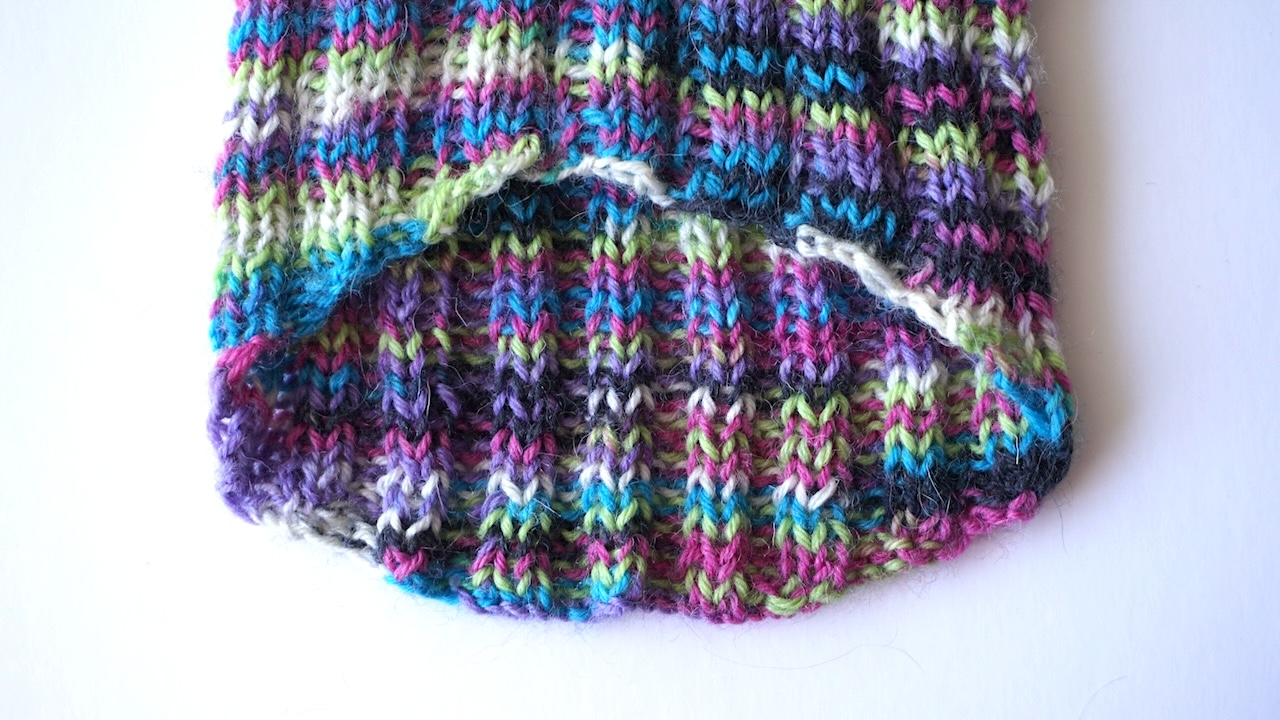
When your sweater is long enough, it’s time to start binding off. To keep the edge stretchy, use a stretchy bind-off method, such as Jeny’s surprisingly stretchy bind off.
Start by binding off XS = 9, S = 10, M = 12 stitches in the middle under the belly. Remember to continue binding off in pattern. Now you have XS = 51, S = 70, M = 87 stitches left.
Continue knitting in flat and bind off 2 stitches at the beginning of every row on each edge 2 times. Then bind off 1 stitch on each edge for XS = 5, S = 8, M = 10 times, and then 2 stitches on each side 1 time and 3 stitches 1 time.
Tip! If the sweater looks a bit too short at this point, you can still make it longer by doing more decrease rounds. For example, instead of the last decrease round (3 stitches on each side 1 time), you can decrease 3 stitches on each side 4 times. This gives you 3 more rows.
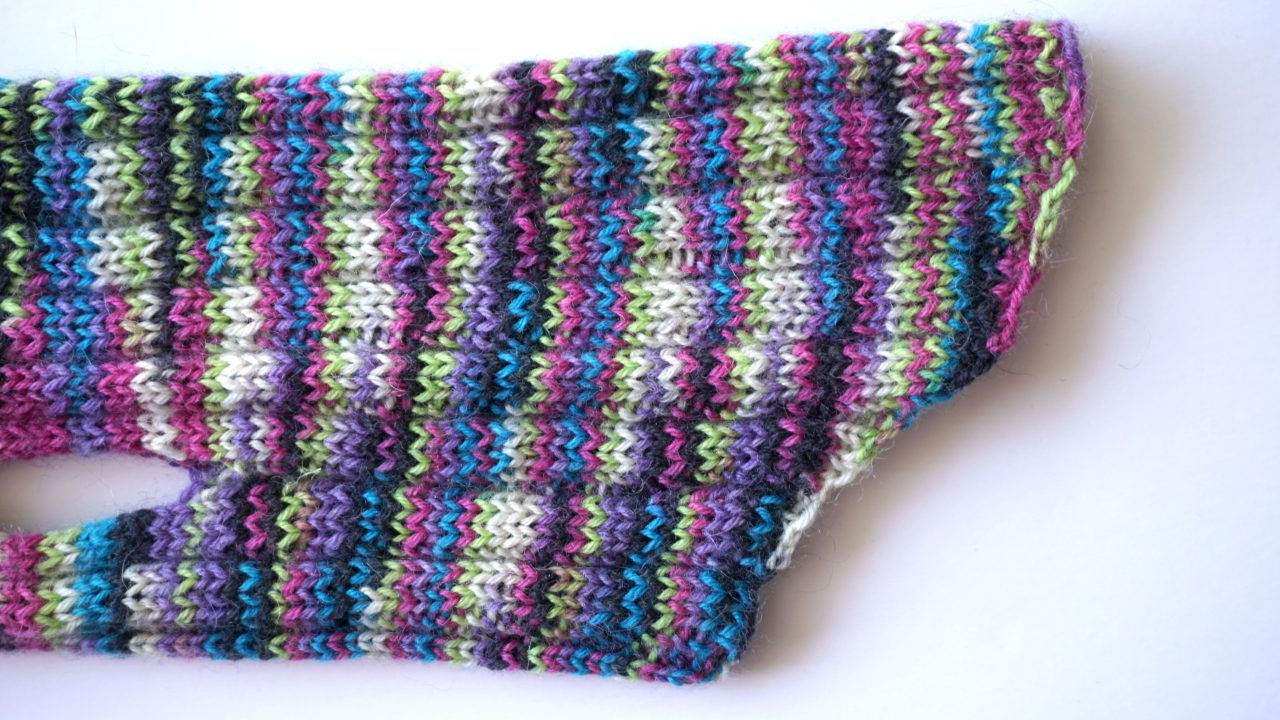
Then bind off all rest of the stitches (XS = 23, S = 36, M = 49). Now the knitting part is complete and the sweater should almost reach the base of your dog’s tail.
The length of the sweater measured from the cast on edge is about XS = 12 inches (31cm), S = 15 3/4 inches (40cm), M = 19 1/4 inches (49cm). The turtleneck of the sweater (about 1 1/8 inches or 3cm) will be folded.
Weave in all yarn ends neatly with a tapestry needle. Smooth out the seams, and make sure no loose threads remain.
If you’d like, you can add a small button or a cute patch to personalize your project.
Step 6: Try It On Your Dog
Now comes the fun part—try the sweater on your dog!
The turtleneck should sit comfortably without restricting the neck, and the leg openings should allow easy movement.
The knit dog sweater should cover the chest and back snugly while keeping your pup cozy.
If it feels too loose or too tight, note your adjustments for the next one. Knitting a dog sweater gets easier each time you make one.
Tips for Customizing Your Dog Sweater
Once you’ve finished your first sweater, you’ll want to knit more!
Here are some ways to make each project unique:
- Add colorwork: Try stripes or a fair isle pattern.
- Use textured stitches: Mix in seed stitch or cables for extra detail.
- Try a hood: Add a few rows of stockinette to shape a small hood.
- Add a leash hole: Leave a small gap in the neck for the leash ring to pass through.
- Use different yarns: Try cotton for spring or bulky wool for winter.
Each sweater can be unique, making knitting dog sweaters flexible and fun. You can adapt this pattern to knit a dog sweater for any breed or size.
Common Mistakes and How to Fix Them
Even simple projects can have hiccups. Here are a few common mistakes knitters make and how to solve them.
1. Sweater Is Too Tight
If your sweater is too snug, use larger needles or add more stitches next time. Remember, ribbing patterns pull in naturally, so extra stitches help loosen the fit.
2. Leg Holes Don’t Line Up
Mark your stitches before binding off for leg holes. Using stitch markers keeps your spacing even and helps avoid uneven holes.
3. Edges Curl Up
If the bottom of your sweater curls, try adding a few rows of ribbing or garter stitch at the end. This will help it lie flat and look neat.
These small adjustments make your knit dog sweater comfortable and professional-looking.
Caring for Your Knitted Dog Sweater
A handmade dog sweater can last for years if cared for properly. Follow these simple care tips:
- Wash gently with cold water and mild detergent
- Lay flat to dry, avoiding direct heat
- Store flat in a dry, cool place
Wool blends may shrink or felt if washed in hot water, so always check your yarn label before cleaning.
Final Thoughts
A dog sweater knitting pattern is a simple and rewarding way to keep your furry friend warm and stylish. By following this guide, you can create a cozy sweater with a short turtleneck and stretchy ribbed body that fits perfectly. Handmade sweaters are more comfortable and durable than store-bought options, and each one is a unique gift made with love.
Knitting your dog’s sweater is also a fun way to practice your skills and get creative with colors and textures. Each time you knit, you’ll improve your skills and end up with a unique sweater that fits perfectly. Your pup will love the warmth, and you’ll love the satisfaction of making something so special.
So grab your yarn, your needles, and your pup—it’s time to start knitting!
Happy knitting!
Read also:
- 10 Easy Knitting Patterns for Beginners
- Knitting with Four Double Pointed Needles: A Beginner’s Complete Guide
- Knitting With Circular Needles: The Simple Guide for Beginners
- Complete Yarn Substitution Guide
- 31 Gifts To Knit for Every Occasion
- Keeping Stitches Secure With Knitting Needle Stoppers
- Knitting Stitch Marker Guide: All You Need to Know